

The harmful effects of untreated oil mists accumulate over time, affecting both workers' health and equipment reliability — with consequences that are difficult to reverse once established. Anyone working in mechanical workshops is familiar with the issue of oil mist generated during machining processes such as turning, milling, grinding and drilling.
These contaminants, produced by the use of neat oils and coolant emulsions, can compromise indoor air quality, affect production efficiency and increase plant maintenance costs.
For this reason, choosing the right oil mist filtration system is not only about meeting safety requirements, but also about improving the overall operating conditions of the workshop.
What is oil mist?
Oil mist consists of extremely fine liquid particles that become airborne during a wide range of machining operations.
Its formation mainly depends on the use of high-pressure or high-speed metalworking fluids and can vary according to several factors, including:
- machining process;
- cutting speed;
- type of coolant or lubricant used;
- operating temperature.
Depending on the production process, oil smoke and submicron particles may also be present, requiring specific filtration technologies. For a comprehensive comparison of available oil mist extraction systems — from centrifugal units to high-efficiency solutions — this overview covers the key technical differences and selection criteria.
Why is oil mist filtration important?
Poor oil mist management can have consequences that go far beyond indoor air quality.
Some of the most common issues include:
- deterioration of the working environment;
- oil deposits on machinery and surrounding surfaces;
- increased equipment wear;
- higher maintenance requirements;
- reduced visibility in production areas;
- greater operator exposure to airborne contaminants.
The harmful effects of untreated oil mists accumulate over time, affecting both workers' health and equipment reliability — with consequences that are difficult to reverse once established. Investing in a properly designed extraction and filtration system therefore helps improve workplace safety, production efficiency and operational continuity at the same time.
How to choose the right oil mist filtration system
There is no single solution suitable for every mechanical workshop. The most appropriate system depends on the specific machining process, the type of coolant or lubricant used, the nature of the contaminant and the plant configuration.
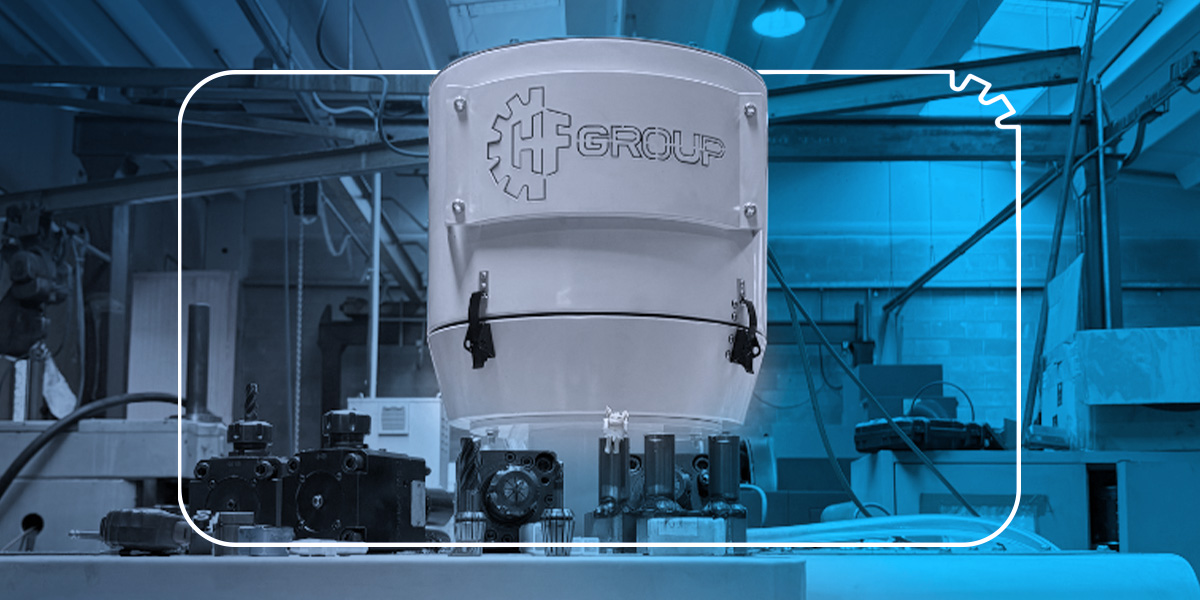
For localized applications on individual machine tools, centrifugal filters such as CleanMist™ PRO are an effective solution. They are designed to separate liquid particles generated by neat oils and coolant emulsions through centrifugal force.
When multiple machines need to be connected to a single extraction system, static coalescence filters such as Mist Compact™ are particularly suitable. These systems are designed for centralized installations and are especially effective in treating oil mist generated by coolant emulsions.
Where neat oil, oil smoke or particularly demanding operating conditions are involved, high-efficiency solutions such as MCOS systems or coalescence filters with fiberglass cartridges may be required to ensure reliable performance and continuous operation even in the most challenging applications.
For this reason, the starting point should never be the choice of technology itself, but a thorough analysis of the production process and actual operating conditions in order to identify the most effective system configuration.
The HF Group approach
Every mechanical workshop has its own unique operating conditions. For this reason, HF Group designs oil mist filtration systems by first analysing the production process and the plant's operating conditions.
The goal is not simply to recommend a specific technology, but to identify the configuration that best meets the customer's actual requirements.
Air quality challenges in mechanical workshops shift throughout the year — not only in summer — making a site-specific assessment essential before selecting any filtration solution.
This approach makes it possible to design solutions that:
- improve indoor air quality;
- optimize system performance;
- reduce maintenance requirements;
- ensure long-term reliability and efficiency.
Because an effective solution depends not only on the filter itself, but on how the entire system is designed and integrated into the production process.
Looking for the right oil mist filtration system for your mechanical workshop?
